
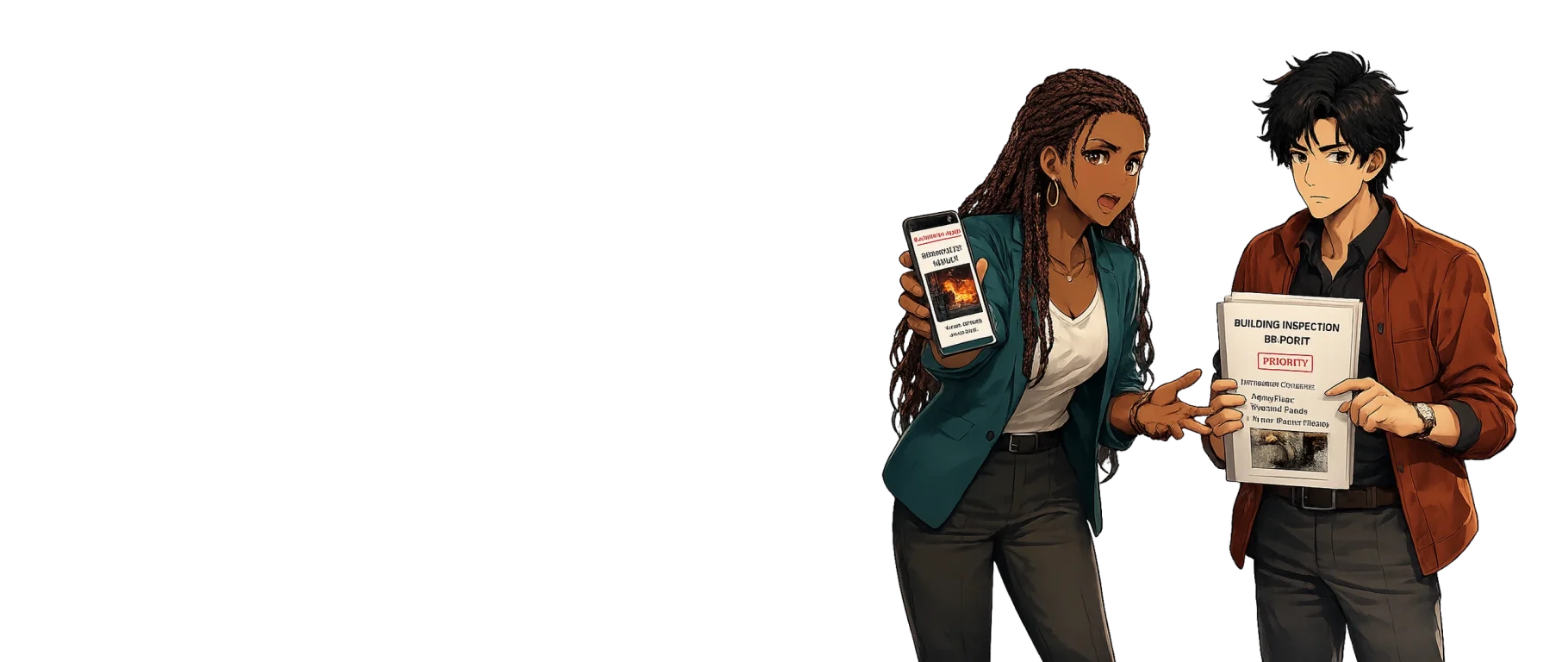
Availability Heuristic
The availability heuristic makes events seem more likely when examples come to mind quickly. Recent, vivid, or emotional stories are especially easy to recall. Mental availability can therefore distort how you estimate frequency and risk.
When the easiest example to remember feels like the best estimate of reality.
See how Availability Heuristic can shape everyday judgment, then use examples and response prompts to test the assumption before it guides a decision.
How It Shows Up in Everyday Life
The availability heuristic makes events feel common or likely when examples are vivid, recent, emotional, or repeatedly discussed. Ease of recall is mistaken for reliable frequency. Quiet and ordinary cases receive less attention simply because they are harder to remember.
Everyday Example: After seeing extensive coverage of a plane incident, you decide to drive a much longer distance because flying suddenly feels unusually dangerous. The memorable event changes your risk estimate more than the broader data.
How It Looks in Action
See one vivid example outweigh the broader evidence.





 ANIMATED LESSON
See Availability in Action
A vivid story races to the front of memory—and quietly begins to look like the most likely outcome.
 Transcript
00:00–00:09 A decision begins with limited information, and a vivid recent example becomes easier to recall than the broader pattern starts shaping what feels important.
00:09–00:18 The mind is not simply recording facts. It is organizing them through a shortcut that can feel natural and efficient.
00:18–00:28 This is the availability heuristic: the pattern influences judgment before the full evidence has been weighed.
00:28–00:39 The turning point comes when the preferred interpretation is tested against information that was easy to overlook.
00:39–00:50 A better decision does not require perfect neutrality. It requires a deliberate check for what the shortcut may be hiding.
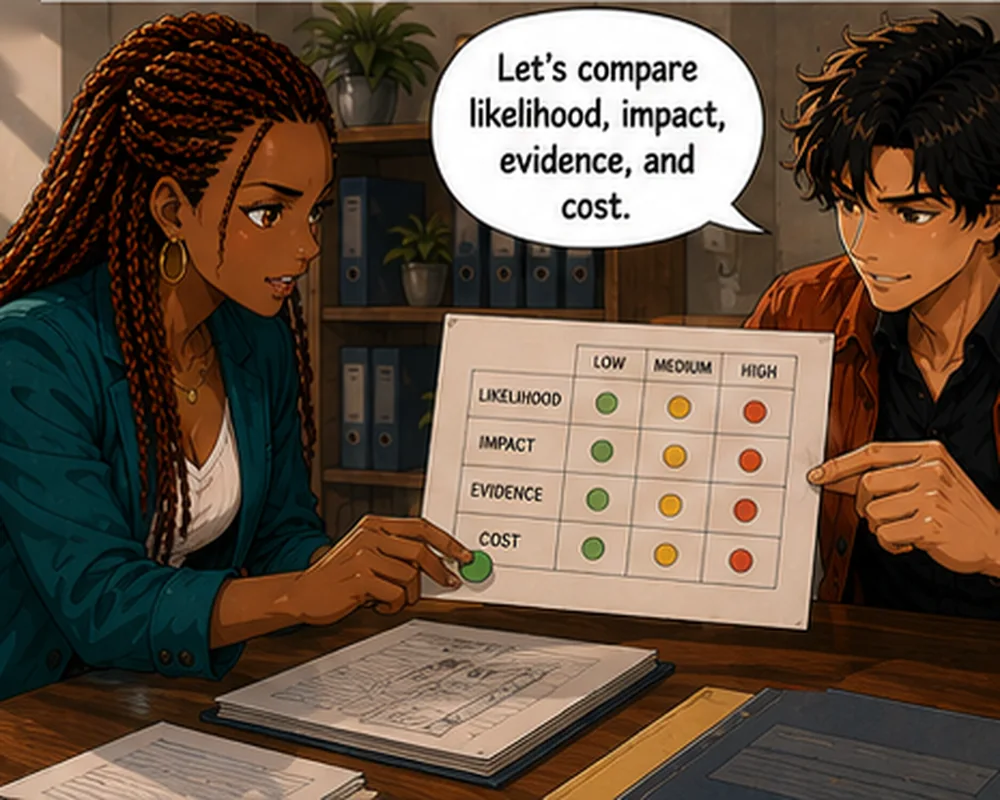
00:50–01:00 Memorable does not mean probable. Compare frequency, impact, evidence, and cost before deciding.
 60 sec lesson
REAL-LIFE DEEP DIVE
Availability Heuristic in Real Life
See how vivid, recent, or emotional examples can distort estimates of frequency and risk.

One Fire Story Rewrites the Whole Budget
A recent apartment fire dominates a maintenance meeting even though inspection data points to more frequent plumbing failures.

 What Happened
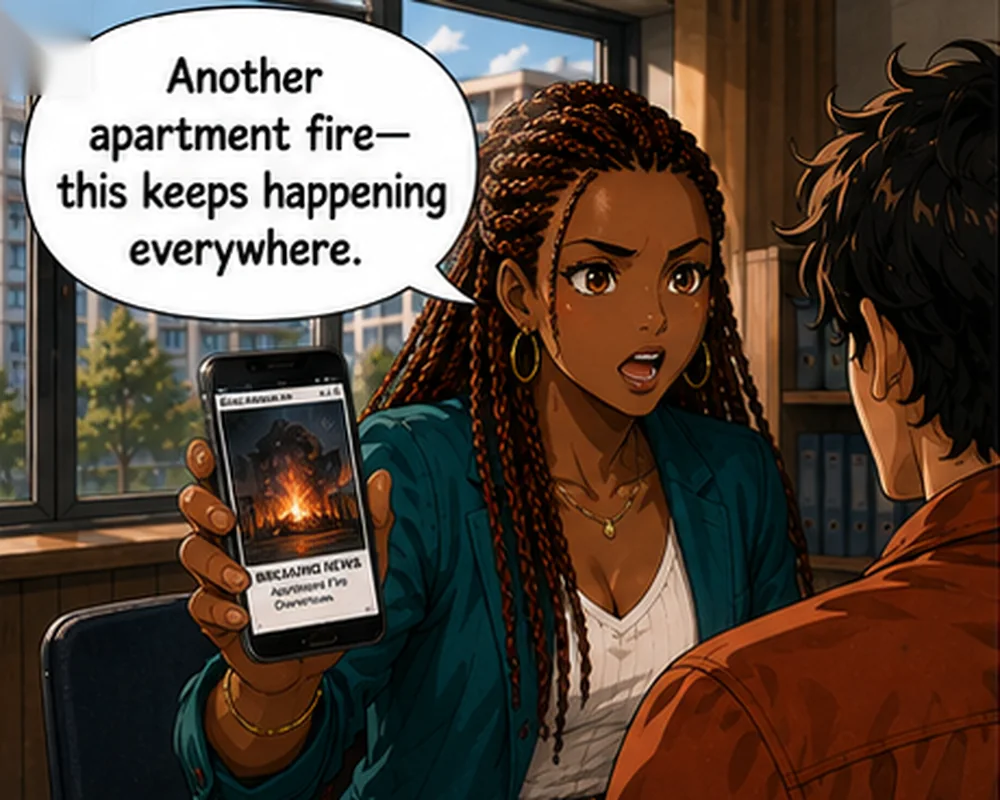
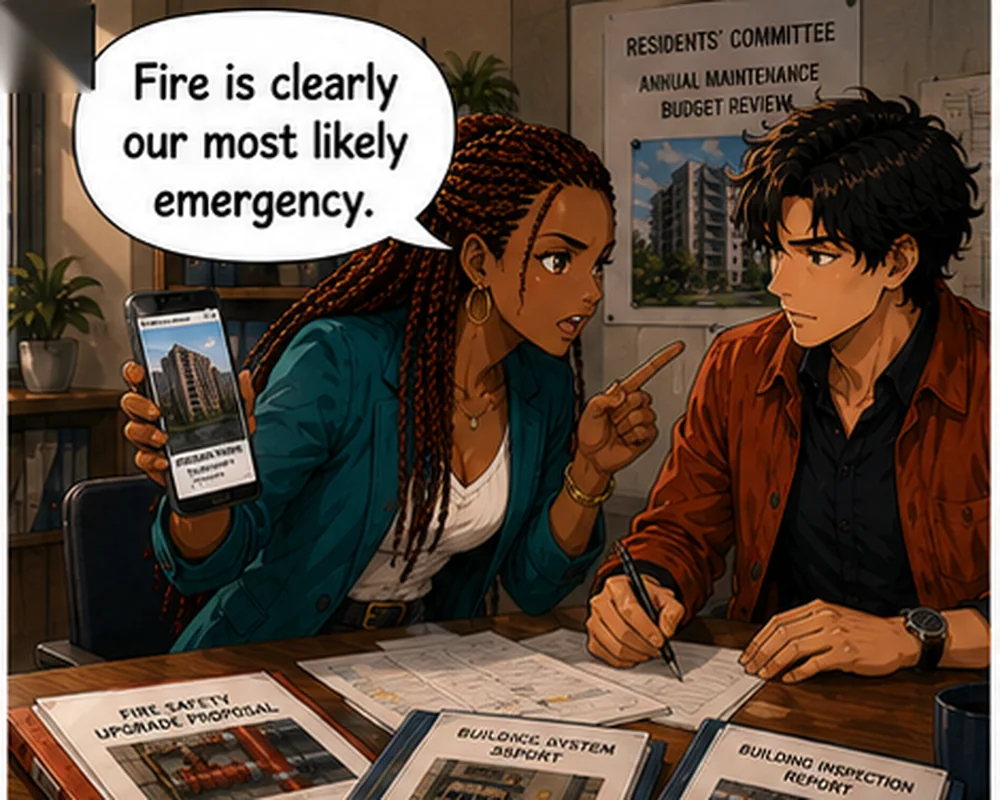
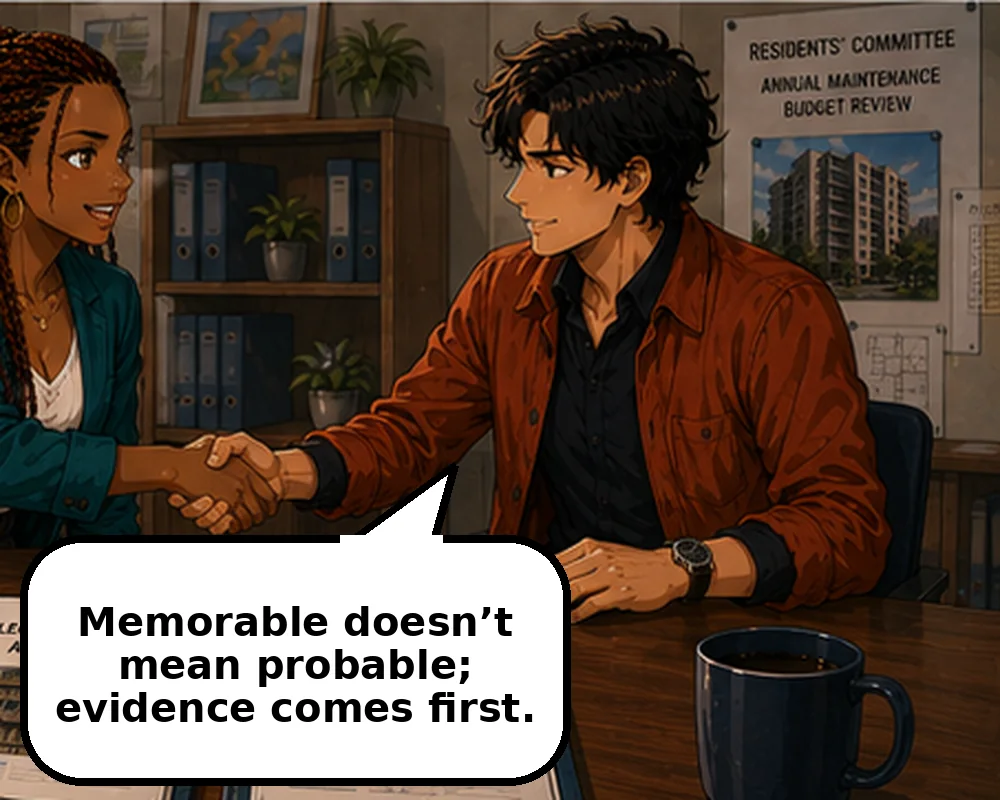
Setup: A residents’ committee must divide a fixed annual maintenance budget among fire protection, electrical repairs, and failing water pipes. A dramatic apartment-fire report has circulated all week.
- Nia: That fire was terrifying. We should move almost the entire budget into fire upgrades.
- Jonah: The building inspection shows repeated pipe failures and electrical faults are currently more likely.
- Nia: But fires are everywhere in the news. That has to be our biggest danger.
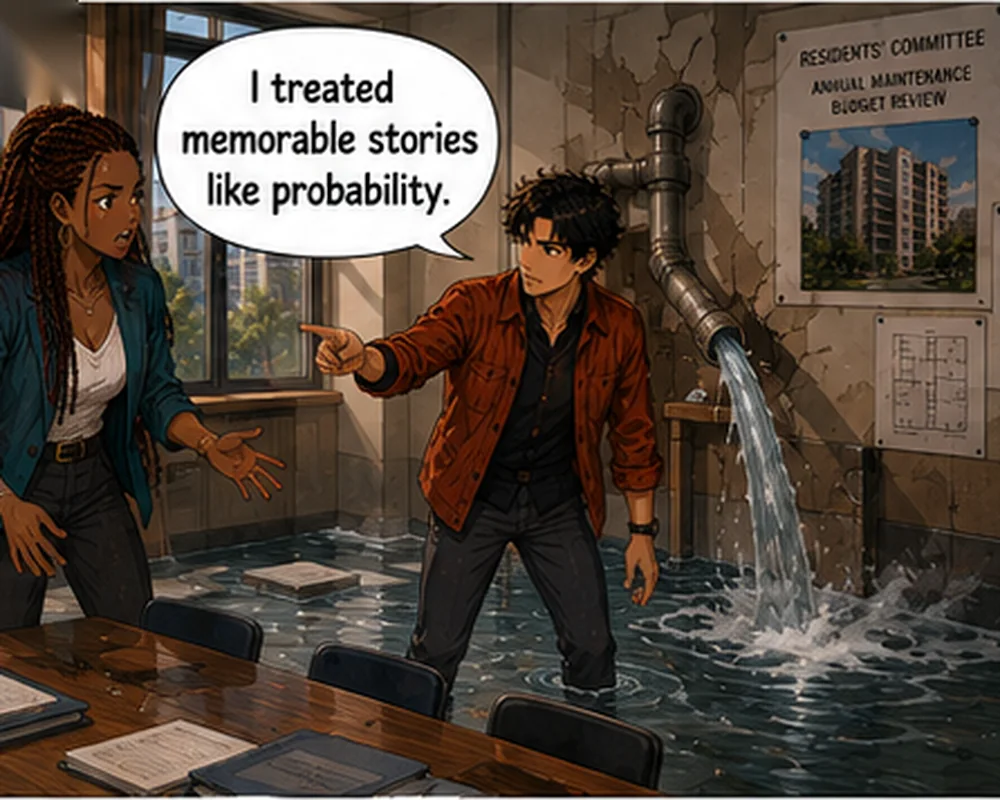
- Jonah: It is the easiest danger to remember, not automatically the most probable one.
- Chair: Let us compare likelihood, impact, evidence, and cost before assigning the money.
Immediate consequence: The committee nearly funds the most memorable risk rather than the most evidence-supported maintenance priorities. A structured comparison restores proportion to the decision.
 How Vivid Risk Takes Over
 Dramatic storyRecent fire
 Easy recallFeels common
 Probability inflatedRisk seems highest
 Budget shiftsOther evidence fades
 Base rates returnRisks compared

A Viral Side-Effect Story Feels Like the Typical Case
One emotional video outweighs large clinical datasets during a routine treatment decision.

What Happened
Setup: Mara is considering a common treatment after discussing benefits and side effects with her physician. That evening, a viral video describes one severe complication in vivid detail.
- Mara: I cannot stop thinking about that patient. The treatment suddenly feels extremely dangerous.
- Dr. Chen: The event is serious, but it is rare. We should compare it with the untreated risk and the full trial data.
- Mara: The video felt more real than a table of percentages.
- Dr. Chen: That is exactly why memorable examples can dominate judgment.
- Mara: Let us review the actual rates and my personal risk factors before I decide.
Immediate consequence: The decision shifts from fear driven by one memorable case to a comparison of base rates, individual factors, benefits, and alternatives.
How One Story Becomes the Estimate
- Emotional exampleViral case
- Recall is effortlessFeels representative
- Frequency inflatedRare seems common
- Decision narrowsBenefits overlooked
- Rates comparedContext restored

One Theft Video Cancels a Carefully Planned Trip
A dramatic clip makes a traveler treat a destination as uniformly unsafe despite broader local evidence.

What Happened
Setup: Elias and Noor have planned a short city trip for months. Two days before departure, Elias watches a widely shared video of a tourist being robbed near a transit station.
Elias begins searching only for similar clips and quickly concludes that theft is happening everywhere. Noor checks official incident maps, hotel guidance, and neighborhood-level data. The city has ordinary urban risks, but the viral event occurred late at night in a small area they do not plan to visit. Elias realizes that the clip is easy to picture, while thousands of uneventful trips leave no memorable video. They revise transport choices and precautions rather than treating one vivid event as the whole probability distribution.
Immediate consequence: The couple replaces an all-or-nothing cancellation with a proportionate plan based on location, timing, prevalence, and practical safeguards.
How a Clip Becomes a Forecast
- Vivid clipEasy to picture
- Search narrowsSimilar stories found
- Risk generalizedWhole city judged
- Plans abandonedProbability assumed
- Local data checkedPrecautions targeted

A Famous Outage Overshadows Years of Reliability
A procurement team rejects a vendor because one public failure is easier to remember than the complete record.

What Happened
Setup: A technology team is choosing between two infrastructure vendors. One candidate suffered a highly publicized outage last year but otherwise has a strong multi-year reliability record.
- Leah: I remember that outage. We cannot choose a company that fails like that.
- Omar: It was severe, but we should compare uptime, recovery performance, security incidents, and contract terms.
- Leah: The screenshots were everywhere. It feels like a recurring problem.
- Omar: Publicity affects recall. The full record shows how often the event actually happens.
- Director: Score both vendors on the same evidence and include the outage as one weighted factor.
Immediate consequence: The team avoids converting a famous incident into a complete reputation. The final choice reflects the full reliability pattern and the seriousness of the known failure.
How Salience Distorts Procurement
- Public incidentHighly visible
- Recall dominatesOther years fade
- Vendor risk inflatedPattern assumed
- Choice rejectedComparison skipped
- Full record scoredWeight becomes fair
WHEN A SHORTCUT HELPS—AND WHEN IT DISTORTS
Is It Availability Bias or a Reasonable Risk Judgment?
A memorable example can be relevant; the question is whether its vividness is replacing evidence about likelihood and impact.

Likely Availability Bias
- One vivid example stands in for the full pattern.
- Recent coverage is mistaken for rising frequency.
- Ease of recall is treated as probability.
- Base rates and quieter evidence receive little weight.

Potentially Reasonable Risk Judgment
- The vivid case is supported by broader trend data.
- Likelihood and impact are evaluated separately.
- Relevant base rates and local conditions are included.
- The response is proportionate to evidence and uncertainty.
Question AssumptionsThink More Clearly