

Halo Effect
The halo effect lets one striking quality shape your judgment of unrelated traits. Attractiveness, confidence, status, or one success can create an overall positive impression. A negative first impression can produce the same spillover in reverse.
When one noticeable trait colors your judgment of the whole person or choice.
See how Halo Effect can shape everyday judgment, then use examples and response prompts to test the assumption before it guides a decision.
How It Shows Up in Everyday Life
The halo effect allows one noticeable quality—such as confidence, attractiveness, status, or warmth—to influence judgments about unrelated traits. A strong first impression can make weak evidence seem better or important gaps easier to overlook. The reverse can happen when one negative trait colors the entire evaluation.
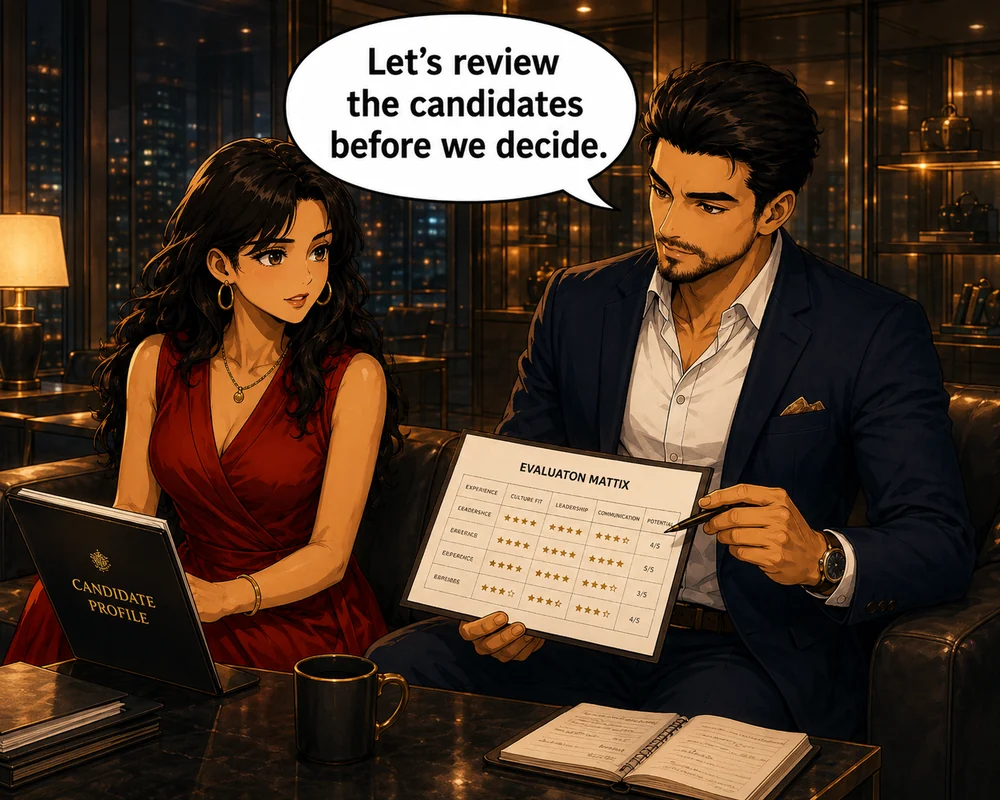
Everyday Example: A job candidate gives a polished, charismatic presentation, and the interview panel begins assuming they are also organized and technically strong. Those qualities have not yet been tested separately.
How It Looks in Action
Watch one positive impression color every later judgment.







 ANIMATED LESSON
See the Halo Effect in Action
A 60-second lesson shows how one impressive quality can quietly lift every unrelated judgment that follows.
 Transcript
00:00–00:08 A polished candidate enters the room with confidence, warmth, and a memorable presence.
00:08–00:16 That strong first impression starts influencing judgments about skills that have not yet been tested.
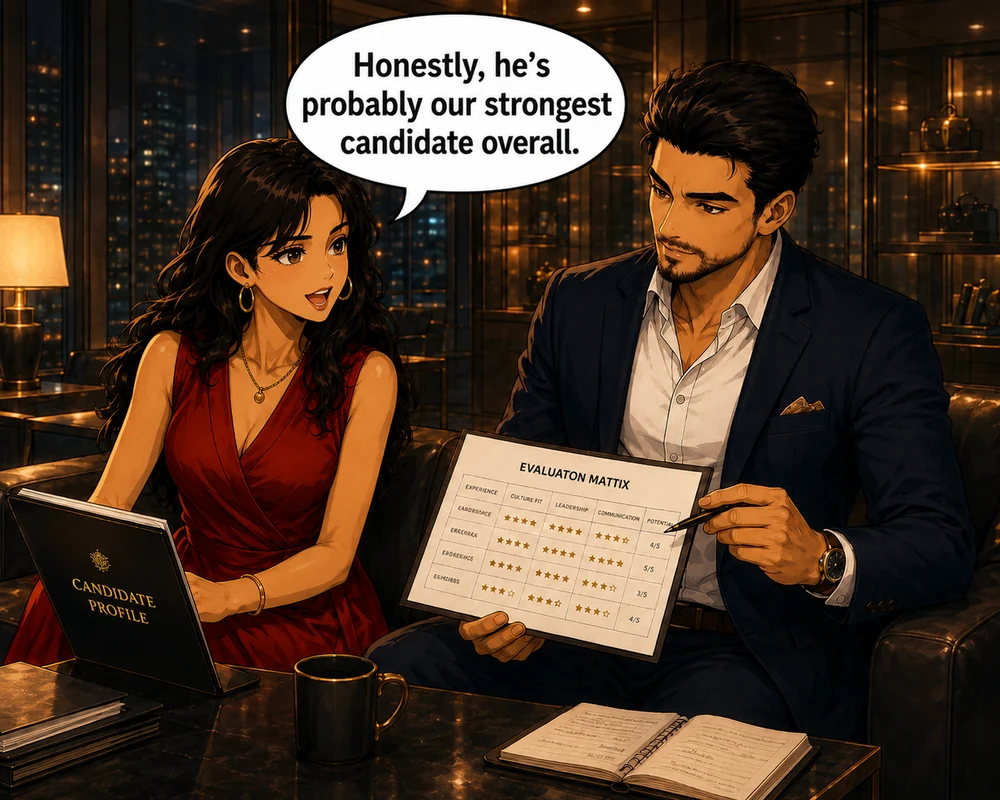
00:16–00:25 Narrator: ‘This is the halo effect: one positive quality spills over into unrelated evaluations.’
00:25–00:34 Presentation style, attractiveness, status, or one success can make every later score feel higher.
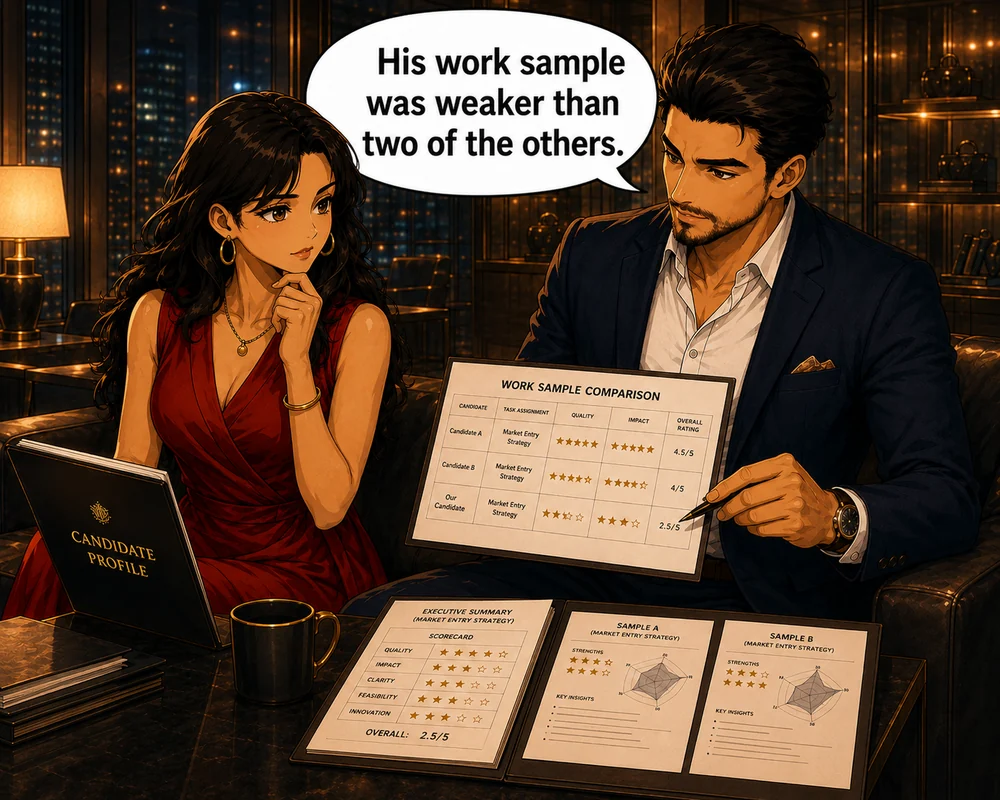
00:34–00:43 The work sample and evidence reveal a more mixed picture than the first impression suggested.
00:43–00:52 Narrator: ‘A strong impression is information—but it is not proof of every other trait.’
00:52–01:00 Better judgment separates criteria, applies the same standards, and lets each claim earn its own evidence.
 60 sec lesson
REAL-LIFE DEEP DIVE
The Halo Effect in Real Life
See how charisma, status, style, and one visible strength can color judgments that should be evaluated separately.

A Magnetic Interview Raises Every Score
A candidate's polish and confidence begin lifting ratings for technical ability, reliability, and problem-solving before the evidence is reviewed.

 What Happened
Setup: A hiring committee is choosing a strategy lead. Adrian is articulate, stylish, and exceptionally confident during the interview.
- Maya: He was polished, confident, and extremely impressive.
- Omar: That may be true, but we should score the competencies separately.
- Maya: I caught myself rating his judgment and technical depth higher because of how he presented.
- Omar: His work sample is weaker than two other candidates, even though his interview was stronger.
- Panel chair: Let us score presentation, evidence, and role-specific skill independently.
Immediate consequence: The panel avoids turning one excellent impression into a blanket judgment. The candidate remains strong in presentation, but the final ranking reflects the full evidence.
 How One Impression Spreads Across the Scorecard
 Strong presenceCandidate impresses
 Positive glow formsGood feeling expands
 Unrelated traits riseScores drift upward
 Evidence is comparedWork sample checked
 Judgment separatesCriteria scored fairly

Charm Starts Looking Like Reliability
A socially confident new acquaintance is assumed to be considerate and dependable, even as small behavioral evidence points the other way.

What Happened
Setup: At a rooftop gathering, Maya introduces her friends to Adrian. He is funny, confident, and immediately commands the room.
- Maya: He is so charming. I can already tell he is thoughtful and dependable.
- Leila: He is charismatic, but did you notice how dismissively he spoke to the server?
- Maya: Maybe he was just distracted. He comes across as such a good person.
- Leila: That is exactly why we should judge reliability from repeated behavior, not one attractive quality.
- Maya: You are right. Charm should not automatically answer every character question.
Immediate consequence: The friends separate social magnetism from kindness and reliability. The relationship is judged through patterns of behavior rather than the glow of a first impression.
How Charm Becomes a Character Verdict
- Charm stands outSocial ease impresses
- Good traits are inferredReliability assumed
- Warning signs shrinkBehavior excused
- Pattern is noticedActions reviewed
- Trust recalibratesEvidence leads

A Charismatic Speaker Makes a Weak Policy Feel Strong
A polished public advocate earns high marks for an initiative even though the evidence review reveals gaps, risks, and unclear implementation details.

What Happened
Setup: During a televised civic forum, Adrian presents a new economic initiative with confidence, clarity, and a compelling personal story.
- Host: The audience clearly responds to your vision and delivery.
- Adrian: That momentum shows the plan is exactly what the city needs.
- Policy analyst: Your presentation is strong, but the evidence base is limited and the implementation risks are unresolved.
- Host: So we may be rating the proposal higher because the presenter is impressive.
- Policy analyst: Exactly. The speaker and the policy need separate evaluation.
Immediate consequence: The forum stops treating personal charisma as evidence of policy quality. The initiative is returned to a direct review of data, costs, and execution risk.
How Personal Appeal Colors Policy Evaluation
- Speaker inspiresConfidence wins attention
- Policy inherits glowPlan feels stronger
- Weaknesses fadeGaps underweighted
- Review separates factorsPerson vs proposal
- Evidence regains weightPolicy judged directly

Premium Design Makes a Smartwatch Seem Better at Everything
A luxury finish and prestigious brand lift assumptions about accuracy, battery life, and value before the products are compared feature by feature.

What Happened
Setup: Omar is comparing two fitness watches. The premium model has a beautiful finish, an elegant display, and a high-status brand image.
- Maya: The Vitalux looks so refined. It must also be more accurate and dependable.
- Omar: The design is excellent, but the independent comparison gives ActiveFit better battery life and similar sensor accuracy.
- Maya: I was letting the premium look raise every other judgment.
- Omar: That is the halo effect. Let us compare each feature separately.
- Maya: Then the less glamorous option may actually fit the need better.
Immediate consequence: The purchase decision moves from prestige and aesthetics to actual performance, price, and use-case fit.
How Premium Style Becomes Product Proof
- Design impressesLuxury cues stand out
- Quality is generalizedEverything seems better
- Tradeoffs disappearPrice and limits fade
- Features are comparedCriteria separated
- Value becomes clearerEvidence wins
WHEN ONE IMPRESSION SPREADS TOO FAR
Is It the Halo Effect or Relevant Evidence?
A visible strength can be meaningful. The bias begins when that strength starts answering questions it cannot logically answer.

Likely the Halo Effect
- One striking positive quality raises judgments of unrelated traits.
- First impressions influence later scoring before separate evidence is considered.
- Contradictory information is softened because the person or product already feels impressive.
- The overall evaluation is more favorable than the criterion-level evidence supports.

Potentially Relevant Evidence
- The positive quality directly relates to the specific judgment being made.
- Different traits or criteria are evaluated separately.
- The same standards are applied across people, products, and proposals.
- Strong impressions may inform attention, but do not replace direct evidence.
Question AssumptionsThink More Clearly