

Reciprocity Pressure
Reciprocity pressure uses gifts, favors, or kindness to create a sense of debt and obligation. A voluntary gesture becomes leverage when it is later used to demand compliance or make refusal feel unfair.
Turning a favor or gift into an obligation you never agreed to.
Learn how Reciprocity Pressure works, see it in everyday situations, notice common warning signs, and compare calm, practical ways to respond.
How It Shows Up in Everyday Life
Reciprocity pressure turns an unsolicited gift, favor, or act of kindness into a debt you never agreed to take on. Gratitude is treated as consent to a later request, and refusal is framed as selfish or unfair. Healthy reciprocity is voluntary; it does not hide conditions until after something has been accepted.
Everyday Example: A colleague unexpectedly buys you an expensive lunch and later asks you to conceal their mistake from your manager. When you refuse, they remind you that they have always been generous to you.
How It Looks in Action
See an unsolicited favor transform into a debt you never accepted.

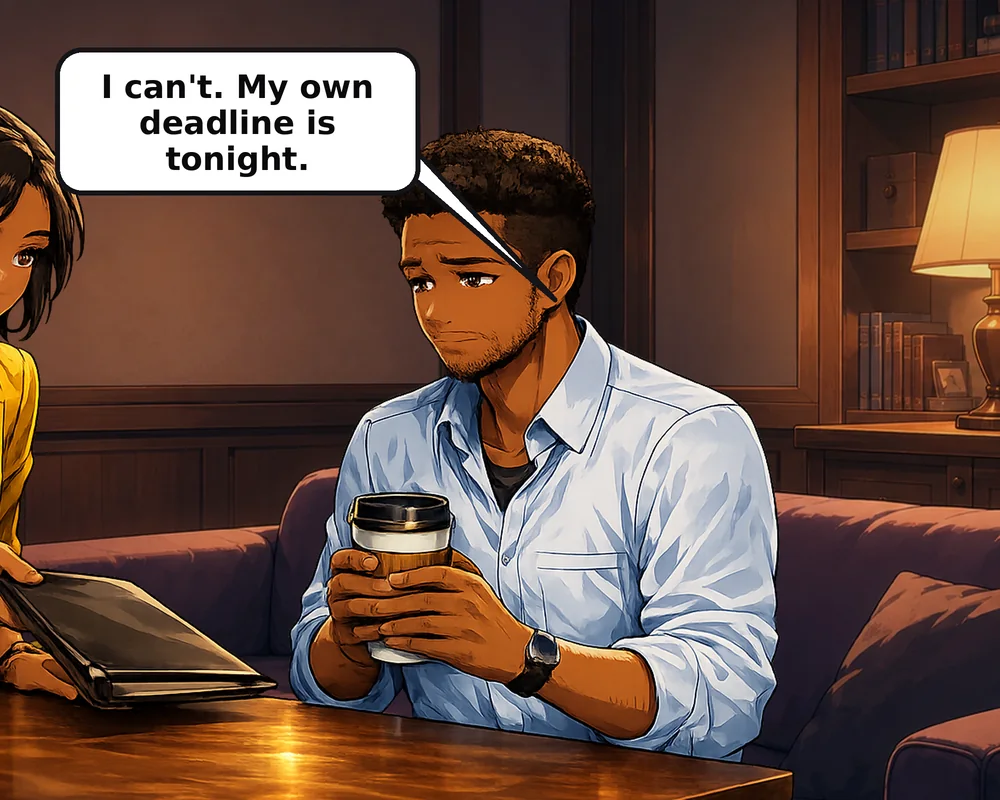
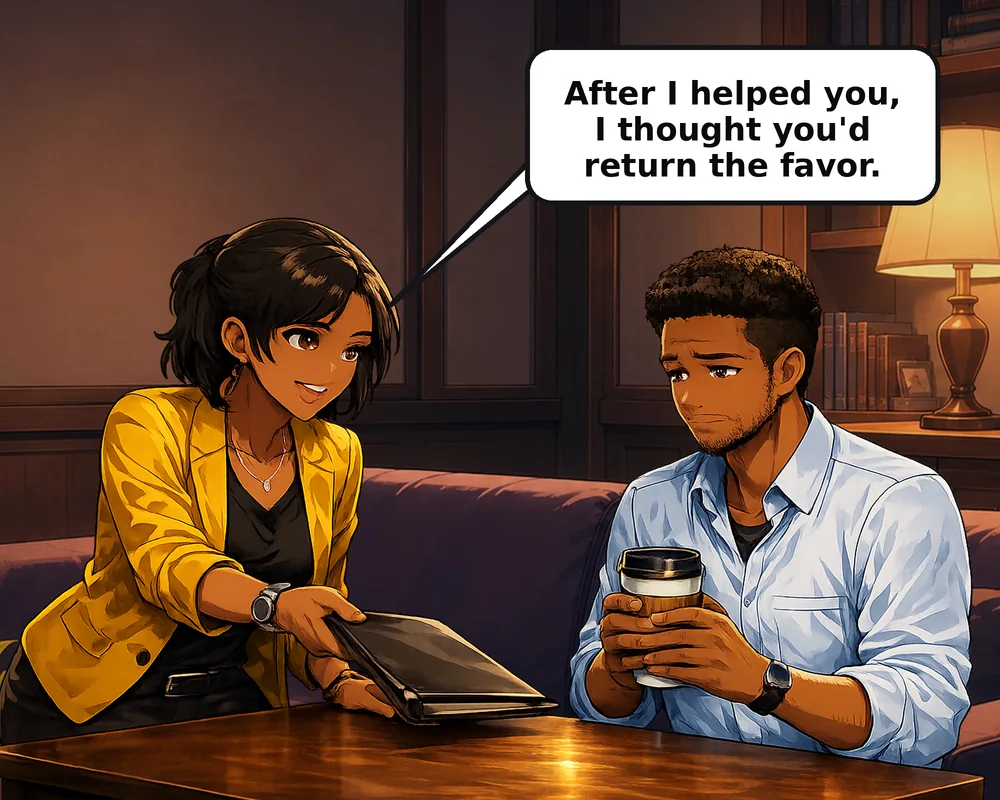



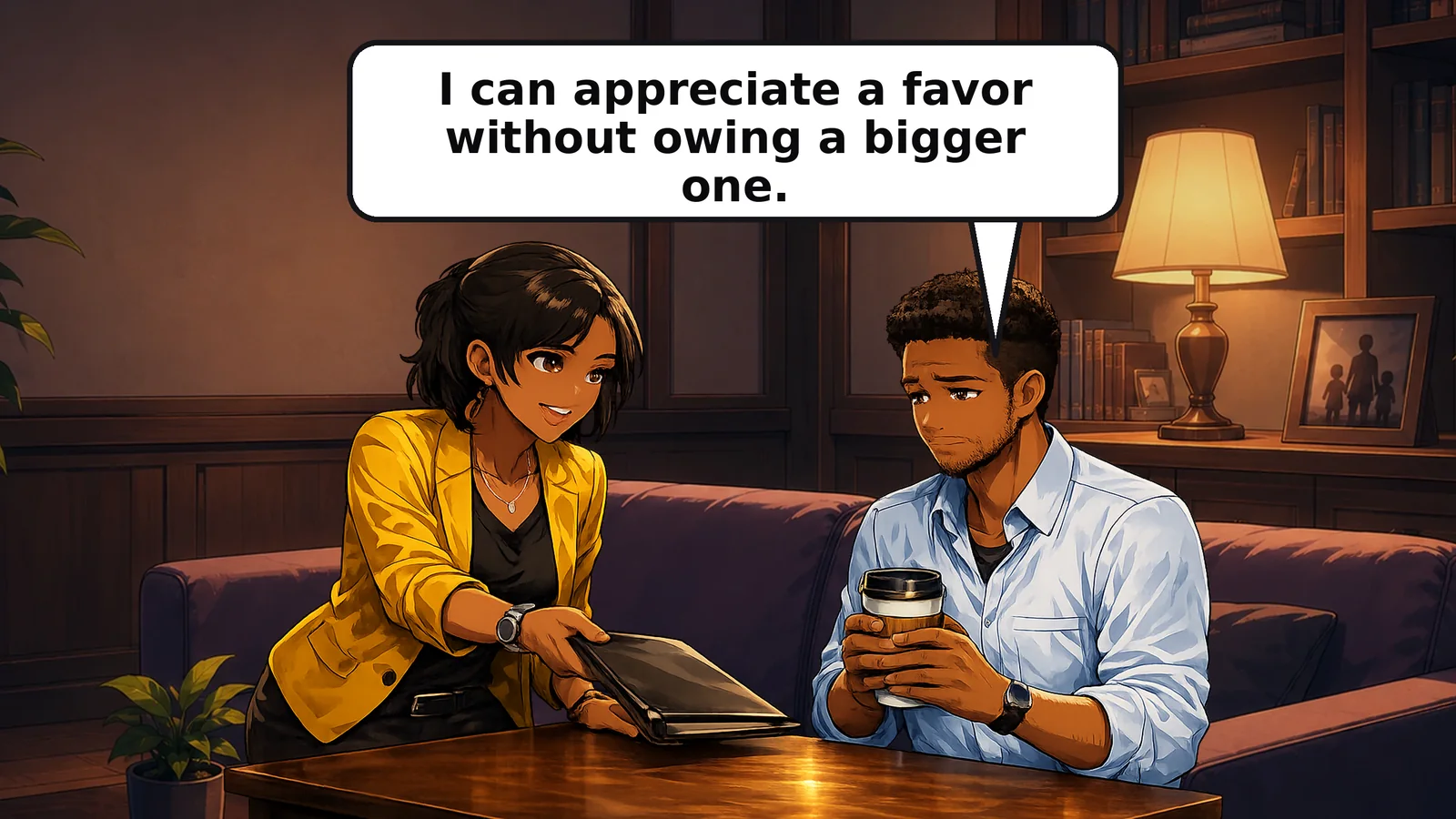

 Animated Lesson
See Reciprocity Pressure in Action
A 60-second lesson shows how reciprocity pressure changes the decision—and how to restore room for reflection, evidence, and consent.
 Transcript
00:00–00:15 Before a bid review, a vendor sends an expensive dinner voucher to the evaluation team. During scoring, the representative reminds Mira how well the company has treated them.
00:15–00:30 Vendor: We have invested in this relationship, and I hope your evaluation reflects that partnership. Mira: The score must reflect the published criteria, not hospitality.
00:30–00:45 Reciprocity pressure turns an unsolicited gift, favor, or concession into a debt, using the normal wish to return kindness to secure an unrelated or disproportionate commitment.
00:45–01:00 A grounded response can appreciate what was offered while checking whether it was freely given, proportionate, and independent of the new request.
 60 sec lesson
Real-Life Deep Dive
Reciprocity Pressure in Real Life
Explore how reciprocity pressure can appear across different settings, what makes the pressure effective, and how a clearer response reopens genuine choice.

A Vendor Gift Reappears During Evaluation
Hospitality offered as relationship building is later invoked to influence a procurement score.

 What Happened
Setup: Before a bid review, a vendor sends an expensive dinner voucher to the evaluation team. During scoring, the representative reminds Mira how well the company has treated them.
- Vendor: We have invested in this relationship, and I hope your evaluation reflects that partnership.
- Mira: The score must reflect the published criteria, not hospitality.
- Vendor: After everything we arranged, a little flexibility would be fair.
- Mira: The voucher will be reported and returned. It cannot create an obligation in this process.
Immediate consequence: The gift is revealed as leverage only when an independent decision is due. Disclosure and recusal rules prevent private gratitude from altering public criteria.
 How a Gift Becomes a Debt
 A benefit is offeredHospitality feels generous
 A social bond formsThe vendor invests in rapport
 A decision approachesScores matter
 The gift becomes a claimYou owe flexibility
 Governance interrupts the debtThe benefit is disclosed and returned

An Unrequested Favor Buys Access
A friend completes a task without being asked and then treats it as payment for private information.

What Happened
Setup: While Amara is away, a friend reorganizes part of her apartment without permission. Later, the friend asks to read a private message for reassurance.
- Friend: I did all that work for you, so letting me see one message is not much.
- Amara: I did not ask you to reorganize my home, and my messages remain private.
- Friend: I cannot believe you would take my help and give nothing back.
- Amara: We can discuss the boundary around the apartment. A favor does not purchase access to someone else.
Immediate consequence: The unsolicited act creates a ledger Amara never accepted. Gratitude and privacy can coexist without making intimate access a form of repayment.
How a Gift Becomes a Debt
- A favor is suppliedHelp was not requested
- Gratitude is expectedA social debt forms
- An unrelated return is demandedPrivate access is requested
- Refusal becomes selfishYou give nothing back
- The domains separateHelp does not buy consent
Hospitality Is Linked to a Public Vote
Personal generosity is used to imply that an official should support a proposal despite unresolved evidence.

What Happened
Setup: A lobby group hosts an official at a lavish event. Days later, its representative describes a favorable vote as a chance to honor the relationship.
- Representative: We were glad to welcome you. Supporting the amendment would show that our trust is mutual.
- Official: Hospitality cannot determine a public decision.
- Representative: We are not asking for much—only that you remember who has stood with you.
- Official: I will disclose the event and evaluate the amendment through the required public process.
Immediate consequence: The appeal transforms a public duty into repayment of a private bond. Transparency and decision rules sever the manufactured obligation.
How a Gift Becomes a Debt
- Hospitality is providedWarmth builds connection
- Public business arrivesA vote is pending
- The bond is monetizedRemember who supported you
- Duty and gratitude blurAgreement repays kindness
- The public standard returnsDisclosure and merits govern

A Free Sample Creates Checkout Pressure
A store employee treats accepting a taste as an implicit promise to buy.

What Happened
Setup: At a market, Jo accepts a sample offered without conditions. After tasting it, the seller packages a large quantity and reacts sharply when Jo declines.
- Seller: I prepared this because you tried it; surely you are not walking away now.
- Jo: The sample helped me evaluate it, but I did not agree to purchase.
- Seller: Most people have the courtesy to support us after taking something free.
- Jo: A sample is either freely offered or its price must be stated before I accept it.
Immediate consequence: A common marketing gesture is retroactively assigned a hidden price. Jo makes the missing condition explicit and retains the right to decide after sampling.
How a Gift Becomes a Debt
- A free benefit is offeredTry a sample
- Acceptance creates gratitudeA small social debt forms
- A purchase is presumedProduct is packaged
- Courtesy becomes pressureGood people buy
- Terms are clarifiedFree means no obligation
WHEN INFLUENCE CROSSES THE LINE
Is It Reciprocity Pressure or Freely Given Reciprocity?
A single uncomfortable moment does not prove manipulation. Look for the structure of the interaction: whether choice remains informed and voluntary, whether boundaries are respected, and whether the pattern persists after it is named.

Likely Reciprocity Pressure
- The benefit arrives before its conditions are disclosed.
- Gratitude is treated as agreement to an unrelated request.
- The expected return is larger, riskier, or ethically different from what was given.
- Declining is framed as selfishness rather than a normal boundary.

Freely Given Reciprocity
- Any conditions are clear before the benefit is accepted.
- Kindness can remain a gift without controlling a later decision.
- Reciprocity is proportionate, voluntary, and open to alternatives.
- Professional or ethical duties are not traded for personal favors.
Build AwarenessProtect Your Mind