

False Dichotomy
A false dichotomy presents only two choices even though other possibilities exist. It pressures the audience to select between artificial extremes and hides compromises, combinations, or alternative paths. Good reasoning asks which relevant options were left out.
Forcing a choice between two options when other possibilities exist.
Learn how False Dichotomy weakens an argument, work through realistic examples, and practice a clearer response focused on the evidence.
How It Shows Up in Everyday Life
A false dichotomy compresses a complex situation into two opposing options and treats the list as complete. Compromises, combinations, degrees, and alternative approaches disappear from view. Once one extreme is made unacceptable, the remaining option can appear inevitable.
Everyday Example: A manager says, “Either you support this exact plan or you do not care whether the project succeeds.” The statement excludes the possibility of supporting the goal while proposing a different method.
How It Looks in Action
Watch a complex choice collapse into two artificial extremes.

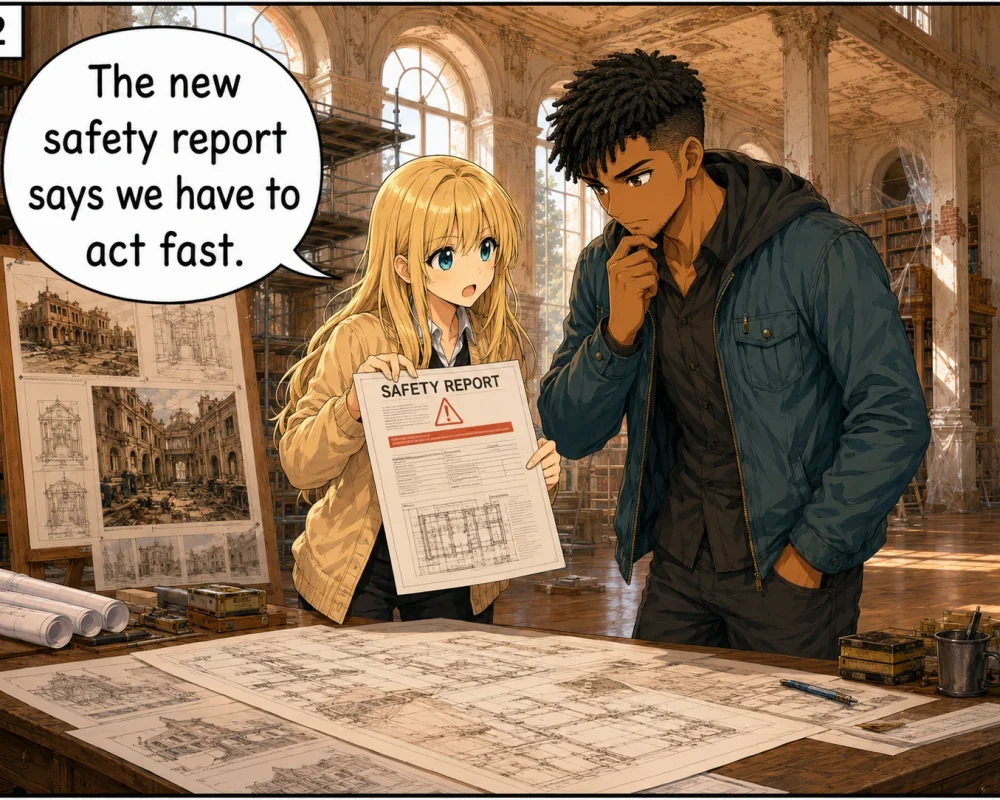
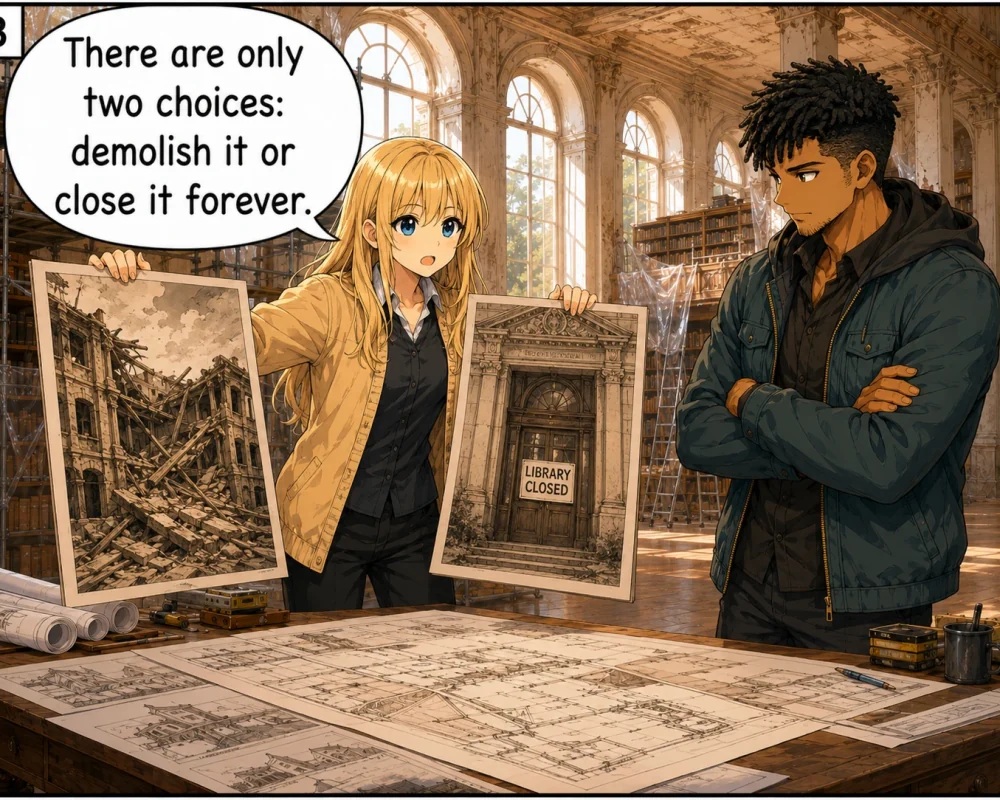
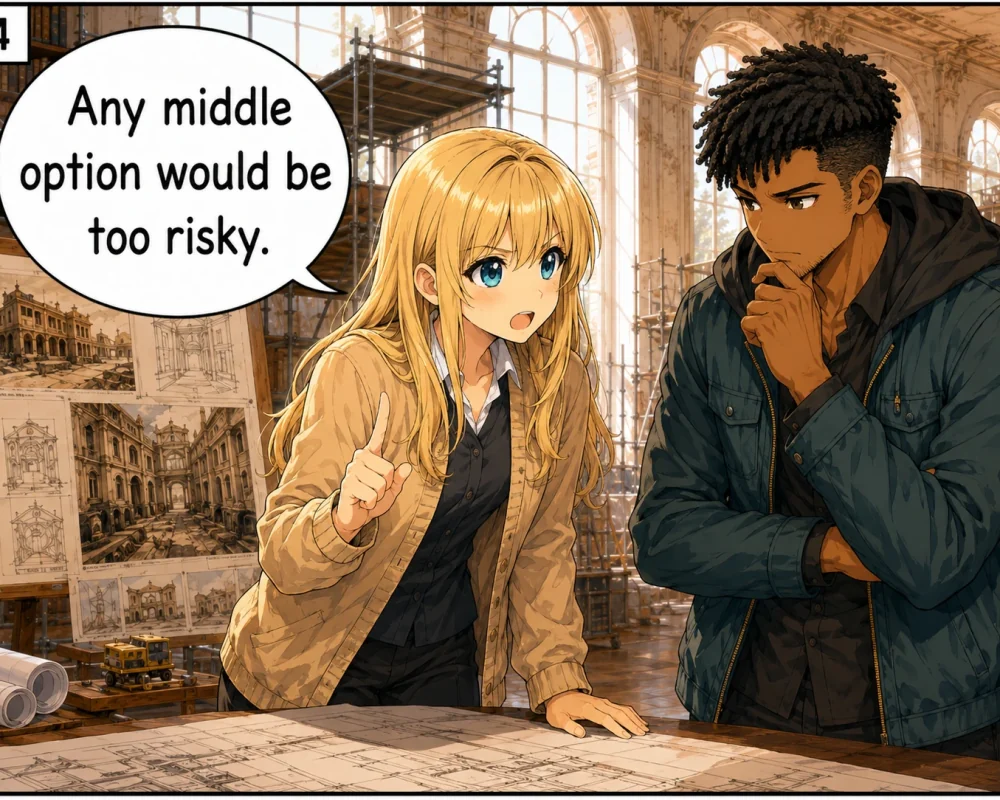
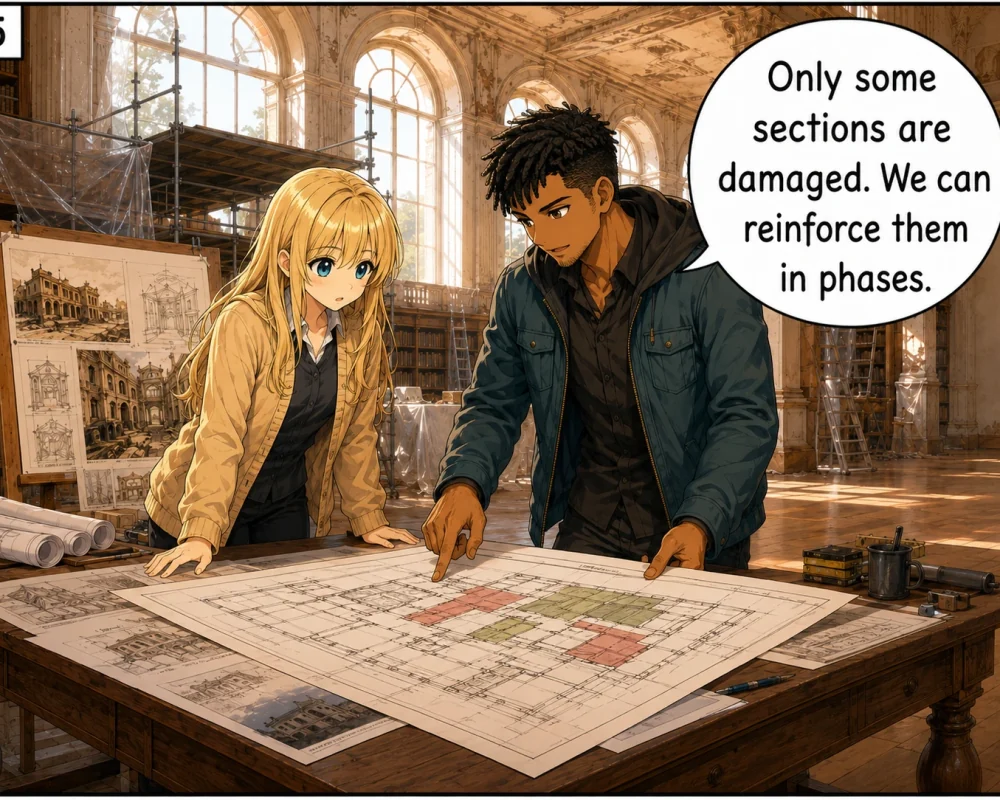
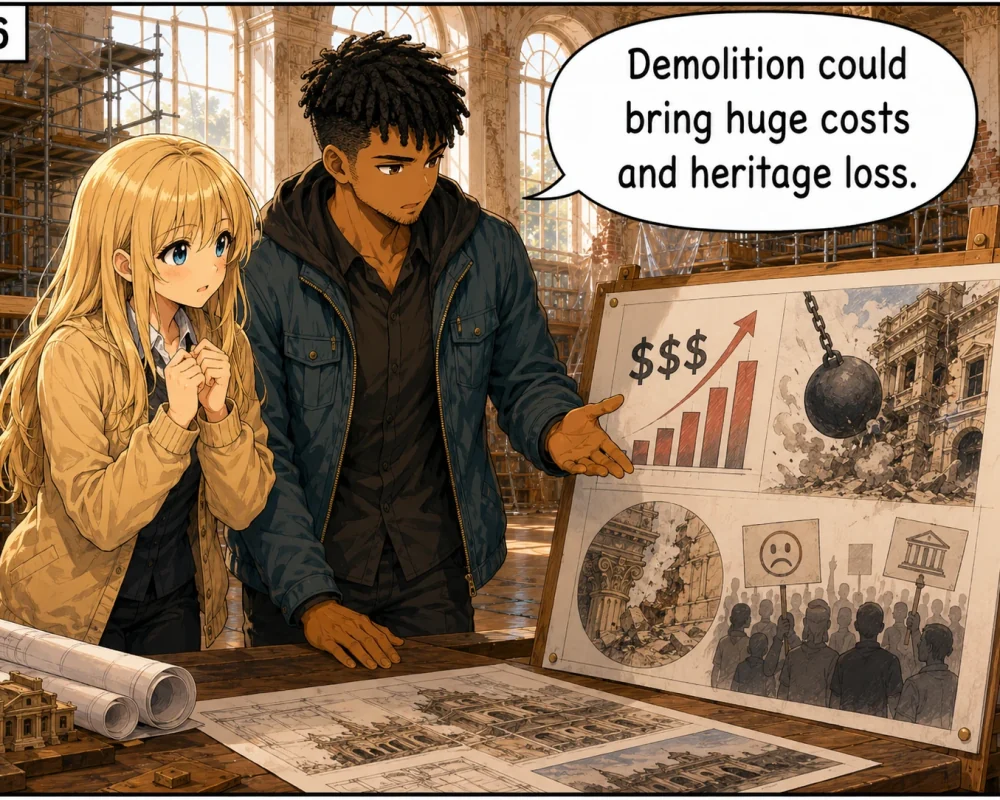
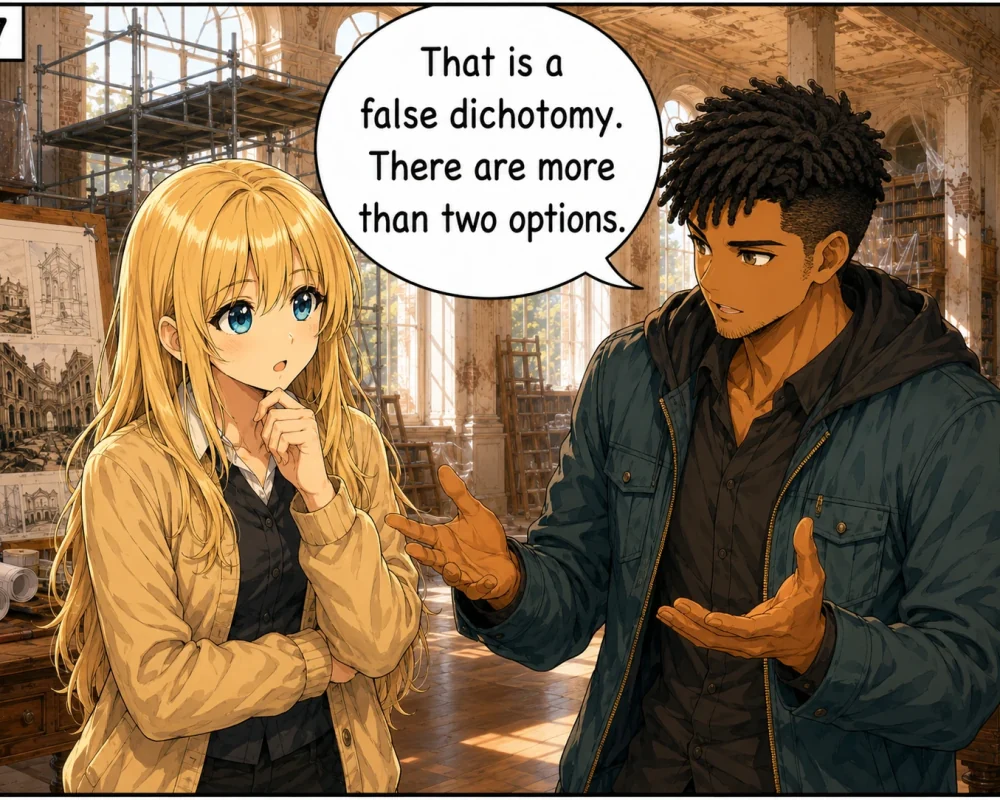
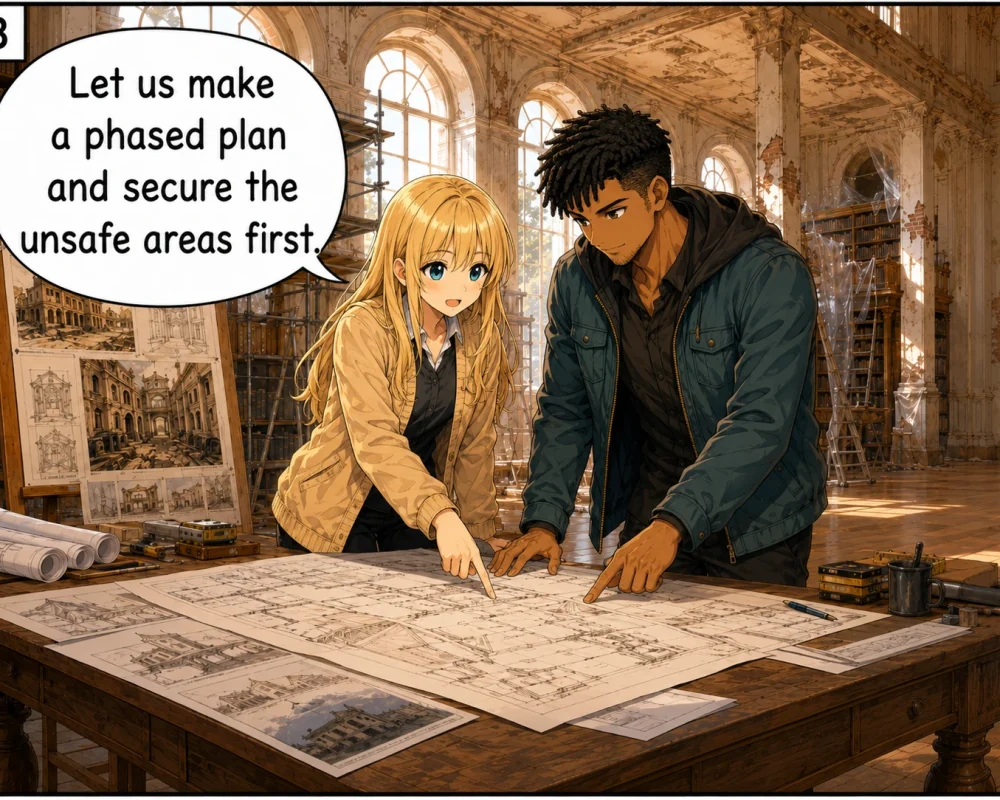


 ANIMATED LESSON
See False Dichotomy in Action
A 60-second lesson shows how a complex decision gets reduced to two artificial extremes—and how a phased middle path brings the real options back into view.
 Transcript
00:00–00:08 A planning team must decide how to make a damaged historic library safe before winter.
00:08–00:16 A rushed voice says there are only two choices: demolish the building or close it forever.
00:16–00:25 Narrator: “That framing sounds decisive, but it hides the many options in between.”
00:25–00:34 Elena and Malik review the floor plan and identify that only some sections are unsafe.
00:34–00:43 They propose a phased plan: secure the damaged wing, keep safe rooms open, and repair the rest in stages.
00:43–00:52 Narrator: “A false dichotomy pressures people to choose between extremes while ignoring combinations, compromises, and gradual steps.”
00:52–01:00 Narrator: “Ask what realistic alternatives were left out—and whether the middle ground was examined fairly.”
 60 sec lesson
REAL-LIFE DEEP DIVE
False Dichotomy in Real Life
See how complex situations are squeezed into artificial either-or choices—and how to recover the overlooked alternatives.

A Restoration Team Is Pressured Toward Two Extremes
A planning meeting about a damaged library is framed as demolition versus total closure, even though a phased preservation plan is available.

 What Happened
Setup: Elena and Malik work on a heritage-restoration team assessing storm damage in a historic library. During a planning meeting, senior project director Marta says the team must either demolish the damaged wing or close the entire building indefinitely.
The statement creates urgency, but it skips over the engineering report spread across the table. The report shows that only a few sections are structurally unsafe, while most reading rooms can stay open if the damaged areas are reinforced and isolated. Elena points to the staged repair plan, and Malik identifies zones that can be secured first. Once the team compares the actual condition of each section instead of the dramatic either-or framing, they see that a phased preservation strategy is both safer and less disruptive.
Immediate consequence: The false dichotomy nearly pushes the team toward needless demolition or a total shutdown. Looking for omitted alternatives reveals a practical middle path.
 How the Choice Gets Artificially Narrowed
 Complex problemDamage varies by zone
 Two extremesDemolish or close
 Middle options hiddenPhased repair ignored
 Pressure risesUrgent false choice
 Better plan missedUnnecessary loss

Moving In Together Is Framed as “Now or Never”
A relationship decision is turned into an emotional ultimatum, even though slower, testable options exist.

What Happened
Setup: Elena wants clarity about the future of her relationship with Malik. During an evening discussion about housing, she says that they either need to sign a lease together this week or admit the relationship is not serious.
That framing sounds decisive, but it treats a complex life decision as if it had only two possible meanings. Malik stays calm and points to a step-by-step plan on the coffee table: compare budgets, try a six-week routine, store a few essentials in each apartment, and revisit the decision after both work schedules settle. The more they examine the practical details, the clearer it becomes that commitment does not depend on only one dramatic move.
Immediate consequence: The false dichotomy turns uncertainty into a high-pressure ultimatum. A middle-ground plan lets them test compatibility without pretending the only options are immediate merger or total rejection.
How the Ultimatum Escalates
- Real decisionShared housing
- Artificial splitMove now or break up
- Nuance erasedTrial options ignored
- Emotions spikePressure replaces planning
- Better fit foundGradual plan

A Community Hearing Reduces Preservation to Two Extremes
A public speaker insists a heritage building must be demolished or abandoned, while a phased safety plan is available.

What Happened
Setup: At a community hearing about the future of the damaged library, Elena presents a board showing which areas need immediate reinforcement and which areas can remain in use during repairs.
- Speaker at lectern: Let us be honest. We only have two choices: tear the building down now or close it forever.
- Elena: The structural report does not say that. It shows a phased option that secures the unsafe zones first.
- Moderator: Please address the plan on the board. What evidence rules out the middle option?
- Speaker at lectern: Partial repair sounds indecisive and expensive.
- Moderator: Then compare the cost and safety evidence directly. A forced either-or is not the only frame available.
Immediate consequence: The hearing almost becomes a vote between two dramatic extremes. The moderator brings the discussion back to the overlooked phased alternative.
How the Debate Gets Distorted
- Public concernSafety and access
- Two extremesDestroy or close forever
- Alternatives obscuredPhased plan sidelined
- Audience pressuredFalse urgency
- Evidence restoredNuanced vote

A Shopping Decision Is Reduced to Premium or Cheap
A store associate pushes two extreme bundles, while more balanced combinations would solve the real need better.

What Happened
Setup: Elena and Malik are shopping for a home study setup. They need a practical mix of devices for work, video calls, and occasional creative projects.
The store associate presents only two options: an expensive all-premium bundle or the cheapest starter package. Malik opens a comparison view on a tablet and points out several middle-ground combinations—keeping one current device, replacing only a weak component, or choosing a mid-tier laptop with separate accessories. Once the decision is reframed around the actual tasks instead of two sales extremes, Elena can evaluate trade-offs clearly.
Immediate consequence: The false dichotomy makes the purchase feel like luxury versus inadequacy. Looking for modular combinations reveals a more sensible fit.
How the Sales Frame Narrows the Choice
- Actual needHome study setup
- Two bundlesPremium or basic
- Mix-and-match hiddenModular options ignored
- Decision rushedArtificial pressure
- Balanced solutionMid-tier choice
WHEN TWO OPTIONS AREN’T REALLY THE ONLY ONES
Is It a False Dichotomy or a Real Constraint?
Sometimes choices are genuinely limited. The difference is whether the limits are demonstrated—or merely asserted while reasonable alternatives are ignored.

Likely a False Dichotomy
- Only two options are presented even though combinations or phased steps are possible.
- Intermediate alternatives are ignored or dismissed without evaluation.
- The framing creates urgency, fear, or pressure to force a quick choice.
- The real trade-offs are hidden behind dramatic extremes.

Possible Real Constraint
- Evidence shows that time, law, safety, or resources truly rule out other options.
- Alternative paths were examined and rejected for stated reasons.
- The limits are explained transparently instead of merely asserted.
- Even within constraints, the decision criteria remain open to review.
Spot Weak ArgumentsReason Clearly