

Red Herring
A red herring introduces an irrelevant issue that draws attention away from the original question. The distraction may be interesting or emotionally charged while doing nothing to resolve the claim under discussion. Clear reasoning returns to the exact point that requires evidence.
Diverting attention to an irrelevant issue instead of answering the point.
Learn how Red Herring weakens an argument, work through realistic examples, and practice a clearer response focused on the evidence.
How It Shows Up in Everyday Life
A red herring introduces a separate issue that attracts attention without answering the question under discussion. The new topic may be true, important, or emotionally interesting, which makes the diversion easy to follow. The original claim quietly disappears before it is resolved.
Everyday Example: You ask why a deadline was missed, and the response becomes a detailed account of how much overtime the team worked on a different project last year. That effort may matter, but it does not explain the current delay.
How It Looks in Action
Watch an irrelevant distraction pull attention away from the real issue.





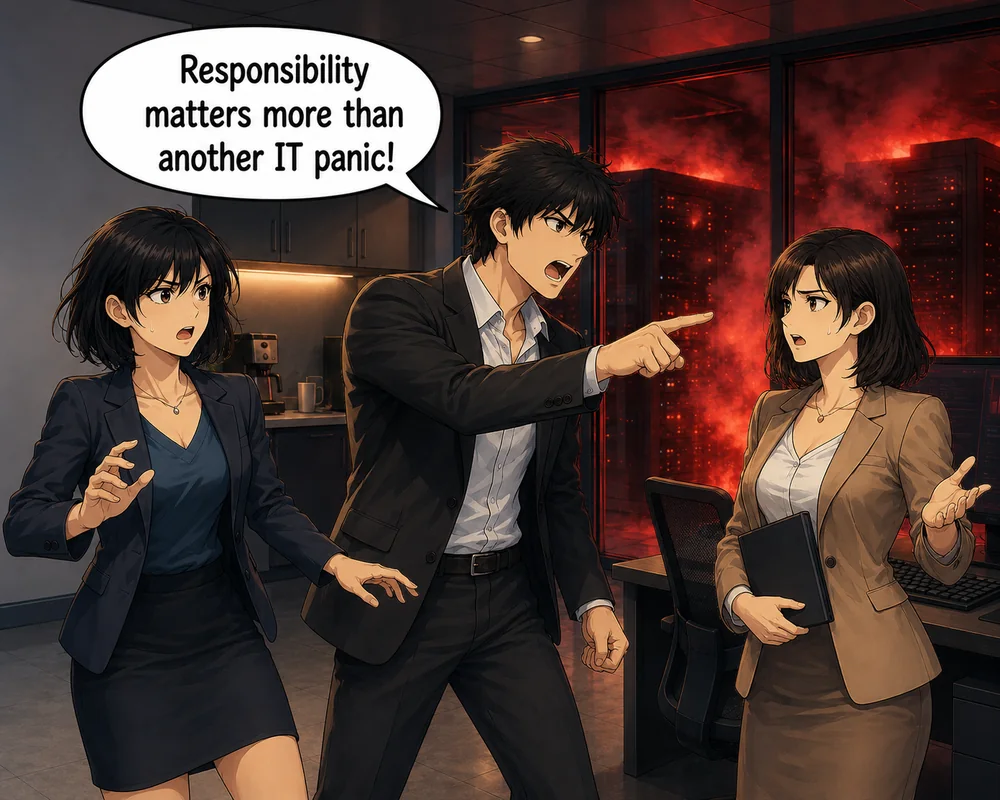




 ANIMATED LESSON
See Red Herring in Action
A 60-second lesson shows how a relevant-sounding distraction can quietly replace the question that still needs an answer.
 Transcript
00:00–00:08 A product team is reviewing a sudden drop in customer satisfaction after the latest release.
00:08–00:16 Nora asks which defects are driving the complaints and whether the rollout should pause.
00:16–00:25 The manager responds by praising the new brand campaign and the team’s recent design award.
00:25–00:34 Narrator: “Those facts may be positive, but they do not answer the question about product quality.”
00:34–00:43 A colleague separates the issues: brand recognition can be discussed later; the defect data needs an answer now.
00:43–00:52 Narrator: “A red herring works by pulling attention toward something interesting, emotional, or easier to defend.”
00:52–01:00 Narrator: “Return to the exact question. Ask whether the new point actually changes the evidence under review.”
 60 sec lesson
REAL-LIFE DEEP DIVE
Red Herring in Real Life
Explore subtle distractions that sound relevant enough to follow—while leaving the original issue unresolved.

A Cost Question Becomes a Story About the Opponent
A candidate is asked how a healthcare proposal will be funded, but redirects the interview toward an opponent’s past spending scandal.

 What Happened
Setup: During a televised interview, a candidate is asked to explain how a proposed healthcare subsidy will be funded without increasing the city’s operating deficit.
- Interviewer: Which revenue source covers the subsidy after the first two years?
- Candidate: Before we discuss that, voters should remember my opponent approved luxury travel while clinics were understaffed.
- Interviewer: That spending may deserve scrutiny, but it does not explain the funding mechanism in your proposal.
- Candidate: It shows who can be trusted with public money.
- Interviewer: Trust is a separate issue. Which line in your budget pays for this policy?
Immediate consequence: The opponent’s scandal is emotionally relevant to the campaign, but it does not answer the funding question. The interviewer has to bring the discussion back to the budget.
 How the Interview Leaves the Real Question
 Funding askedSpecific cost question
 Opponent introducedOld scandal raised
 Emotion takes overAudience attention shifts
 Policy stays untestedNo funding answer
 Question restoredReturn to the numbers

A Product Complaint Is Buried Under Brand Excitement
A customer asks about a durability problem, while the brand’s response highlights popularity, new colors, and influencer praise instead of the defect.

What Happened
Setup: A customer posts photographs showing that the sole of a new running shoe separated after three weeks. The post asks whether the defect is covered by warranty.
The brand replies by celebrating how quickly the new colorway sold out and links to an influencer review praising the shoe’s style. Other users begin debating the design and the campaign instead of the failed sole. None of that shows whether the customer used the shoe incorrectly, whether the batch is defective, or whether the warranty applies. A support moderator eventually moves the conversation back to the order number, wear pattern, and return policy.
Immediate consequence: The brand’s popularity is not irrelevant to marketing, but it is a red herring in a warranty discussion. The original evidence must still be evaluated.
How the Complaint Gets Replaced
- Defect reportedSole split early
- Buzz substitutedPopularity highlighted
- Comments redirectNew colors discussed
- Evidence ignoredWarranty not addressed
- Issue reopenedAsk about the defect

A Grading Question Turns Into a Lecture on Study Habits
Students ask how an assignment was scored, but the instructor responds with general advice that never clarifies the grading standard.

What Happened
Setup: After receiving inconsistent marks on the same assignment, several students ask their lecturer how the “depth of analysis” criterion was applied.
The lecturer spends the next fifteen minutes explaining time management, sleep, and better note-taking. The advice is sensible and may help future performance, but it does not reveal why two similar submissions received very different scores. One student politely asks to return to the rubric and requests two anonymized examples showing what counted as shallow and strong analysis. Only then does the class receive information that addresses the original concern.
Immediate consequence: Helpful information can still function as a red herring when it replaces the question being asked. The grading standard needed direct clarification.
How Useful Advice Becomes a Detour
- Criterion questionedRubric unclear
- Study advice offeredGenerally useful
- Class follows detourNew topic expands
- Rubric stays vagueOriginal issue remains
- Standard requestedReturn to criteria

A Chore Dispute Becomes a Story About the Parent’s Childhood
A teenager raises an uneven workload, but the response shifts to how difficult life was for the parent at the same age.

What Happened
Setup: At dinner, sixteen-year-old Leo explains that his school workload has increased and asks whether the household chores can be redistributed for exam month.
- Leo: I am doing the dishes, laundry, and shopping on the same nights I have revision classes.
- Parent: When I was your age, I worked weekends and still helped my whole family.
- Leo: I understand that was difficult. Can we still look at this month’s schedule?
- Parent: Young people today do not realize how much easier they have it.
- Other parent: That comparison is a different conversation. Let us list the current tasks and deadlines first.
Immediate consequence: The childhood story may be meaningful, but it distracts from the present scheduling problem. The family makes progress only after returning to the actual workload.
How the Family Conversation Drifts
- Workload raisedCurrent schedule
- Past hardship recalledDifferent situation
- Comparison dominatesFeelings intensify
- Chores stay unevenNo plan made
- Present issue mappedTasks reviewed now
WHEN A NEW POINT IS RELEVANT—AND WHEN IT ONLY PULLS FOCUS AWAY
Is It a Red Herring or Relevant Context?
A new issue is not automatically a distraction. The key is whether it changes the evidence, decision criteria, or answer to the original question.

Likely a Red Herring
- The new point attracts attention but does not answer the question asked.
- Emotion, novelty, or controversy replaces examination of the original evidence.
- The discussion becomes easier for the speaker while the core issue remains unresolved.
- Removing the distraction leaves the original claim exactly where it started.

Potentially Relevant Context
- The new information directly changes the facts or standards under review.
- It explains a cause, constraint, conflict, or consequence tied to the decision.
- The speaker clearly connects the context back to the original question.
- The original claim still receives a direct answer after the context is considered.
Spot Weak ArgumentsReason Clearly